When Should You See Your Primary Care Provider?

Angie Volzke • May 12, 2026

When Should You See Your Primary Care Provider?


Life gets busy, and it can be easy to put your health on the back burner. Many people only think about seeing a doctor when they’re feeling seriously sick, but regular visits with your primary care provider are an important part of staying healthy year-round.


A primary care provider does more than treat illness, they help prevent health problems, manage ongoing conditions, and support your overall well-being through every stage of life.

So, when should you schedule an appointment?


For Annual Checkups

Even if you feel healthy, yearly wellness visits are important. Regular checkups can help catch health concerns early, before they become bigger problems. Your provider may check blood pressure, cholesterol, weight, vaccines, and other preventive screenings based on your age and health history.


When You’re Feeling Sick

Your primary care provider can help treat common illnesses like:

  • Colds and flu
  • Sore throats
  • Ear infections
  • Sinus infections
  • Stomach issues
  • Allergies

Seeing your provider can help you recover faster and make sure symptoms don’t turn into something more serious.


If Symptoms Don’t Go Away

It’s important to schedule an appointment if you notice symptoms that linger or keep coming back, such as:

  • Ongoing fatigue
  • Frequent headaches
  • Trouble sleeping
  • Persistent pain
  • Changes in appetite or weight
  • Shortness of breath

Your body often gives warning signs when something needs attention.


To Manage Chronic Conditions

If you live with conditions like diabetes, high blood pressure, asthma, or anxiety, regular visits help keep your treatment on track. Your provider can monitor your progress, adjust medications if needed, and answer questions about your health.


For Mental Health Support

Mental health is just as important as physical health. If you’re feeling overwhelmed, anxious, stressed, or depressed, reaching out for support is a strong and important step. Primary care providers can help connect you with behavioral health resources and treatment options.


Before Small Problems Become Big Ones

One of the biggest benefits of primary care is prevention. Early care can often prevent more serious health issues later on. Building a relationship with a provider also means you have someone who understands your health history and can help guide your care over time.


We’re Here for You

At Community Health, we believe healthcare should feel personal, supportive, and accessible. Whether you need a routine checkup, help managing a condition, or care for an unexpected illness, our team is here to help you and your family stay healthy.




By Angie Volzke May 12, 2026
La vida se vuelve ocupada, y puede ser fácil dejar tu salud en segundo plano. Muchas personas solo piensan en ver a un médico cuando se sienten gravemente enfermas, pero las visitas regulares con tu proveedor de atención primaria son una parte importante para mantenerte saludable durante todo el año. Un proveedor de atención primaria hace más que tratar enfermedades, ayuda a prevenir problemas de salud, manejar condiciones continuas y apoyar su bienestar general en cada etapa de la vida. Entonces, ¿cuándo deberías programar una cita? Para chequeos anuales Incluso si te sientes saludable, las visitas anuales de bienestar son importantes. Los chequeos regulares pueden ayudar a detectar problemas de salud a tiempo, antes de que se conviertan en problemas mayores. Tu proveedor puede revisar la presión arterial, el colesterol, el peso, las vacunas y otros exámenes preventivos según tu edad e historial de salud. Cuando te sientes enfermo Su proveedor de atención primaria puede ayudar a tratar enfermedades comunes como: Resfriados y gripe Dolores de garganta Infecciones de oído Infecciones sinusales Problemas estomacales Alergias Ver a su proveedor puede ayudarle a recuperarse más rápido y asegurarse de que los síntomas no se conviertan en algo más serio. Si los síntomas no desaparecen Es importante programar una cita si nota síntomas que persisten o siguen reapareciendo, tales como: Fatiga continua Dolores de cabeza frecuentes Dificultad para dormir Dolor persistente Cambios en el apetito o el peso Falta de aire Tu cuerpo a menudo da señales de advertencia cuando algo necesita atención. Para manejar condiciones crónicas Si vives con condiciones como diabetes, hipertensión, asma o ansiedad, las visitas regulares ayudan a mantener tu tratamiento en camino. Tu proveedor puede monitorear tu progreso, ajustar los medicamentos si es necesario y responder preguntas sobre tu salud. Para el Apoyo de la Salud Mental La salud mental es tan importante como la salud física. Si te sientes abrumado, ansioso, estresado o deprimido, buscar apoyo es un paso fuerte e importante. Los proveedores de atención primaria pueden ayudarte a conectarte con recursos de salud conductual y opciones de tratamiento. Antes de que los problemas pequeños se conviertan en grandes  Uno de los mayores beneficios de la atención primaria es la prevención. El cuidado temprano a menudo puede prevenir problemas de salud más graves en el futuro. Construir una relación con un proveedor también significa que tienes a alguien que entiende tu historial de salud y puede ayudarte a guiar tu cuidado con el tiempo. Estamos aquí para ti En Community Health, creemos que la atención médica debe sentirse personal, solidaria y accesible. Ya sea que necesites un chequeo rutinario, ayuda para manejar una condición o atención por una enfermedad inesperada, nuestro equipo está aquí para ayudarte a ti y a tu familia a mantenerse saludables.
By Angie Volzke April 17, 2026
El cáncer de piel es el cáncer más común en Estados Unidos y en todo el mundo. Comprender su riesgo y la importancia de la detección temprana puede marcar una diferencia que salve vidas. Alrededor de 1 de cada 5 estadounidenses desarrollará cáncer de piel antes de los 70 años. Experimentar cinco o más quemaduras solares puede duplicar su riesgo de melanoma. Cuando se detecta a tiempo, el melanoma tiene una tasa de supervivencia a cinco años del 99%. El cáncer de piel se diagnostica a una alta tasa en todo el país. De hecho, más de 9,500 personas en los Estados Unidos son diagnosticadas cada día, y cada año, más personas son diagnosticadas con cáncer de piel que con todos los demás tipos de cáncer combinados. Los cánceres de piel no melanoma son especialmente comunes, con más de 5.4 millones de casos tratados en más de 3.3 millones de personas, siendo todavía la estimación más confiable disponible. Además, la queratosis actínica, la condición precancerosa de piel más común, afecta a más de 58 millones de estadounidenses. Más allá del impacto en la salud, el cáncer de piel también conlleva una carga financiera significativa. Se estima que el costo anual del tratamiento en los Estados Unidos es de 8,1 mil millones de dólares, incluyendo 4,8 mil millones de dólares para cánceres de piel no melanoma y 3,3 mil millones de dólares para melanoma. Conocer estos hechos es el primer paso para proteger tu piel, y programar revisiones regulares puede ayudar a detectar problemas temprano, cuando son más tratables.
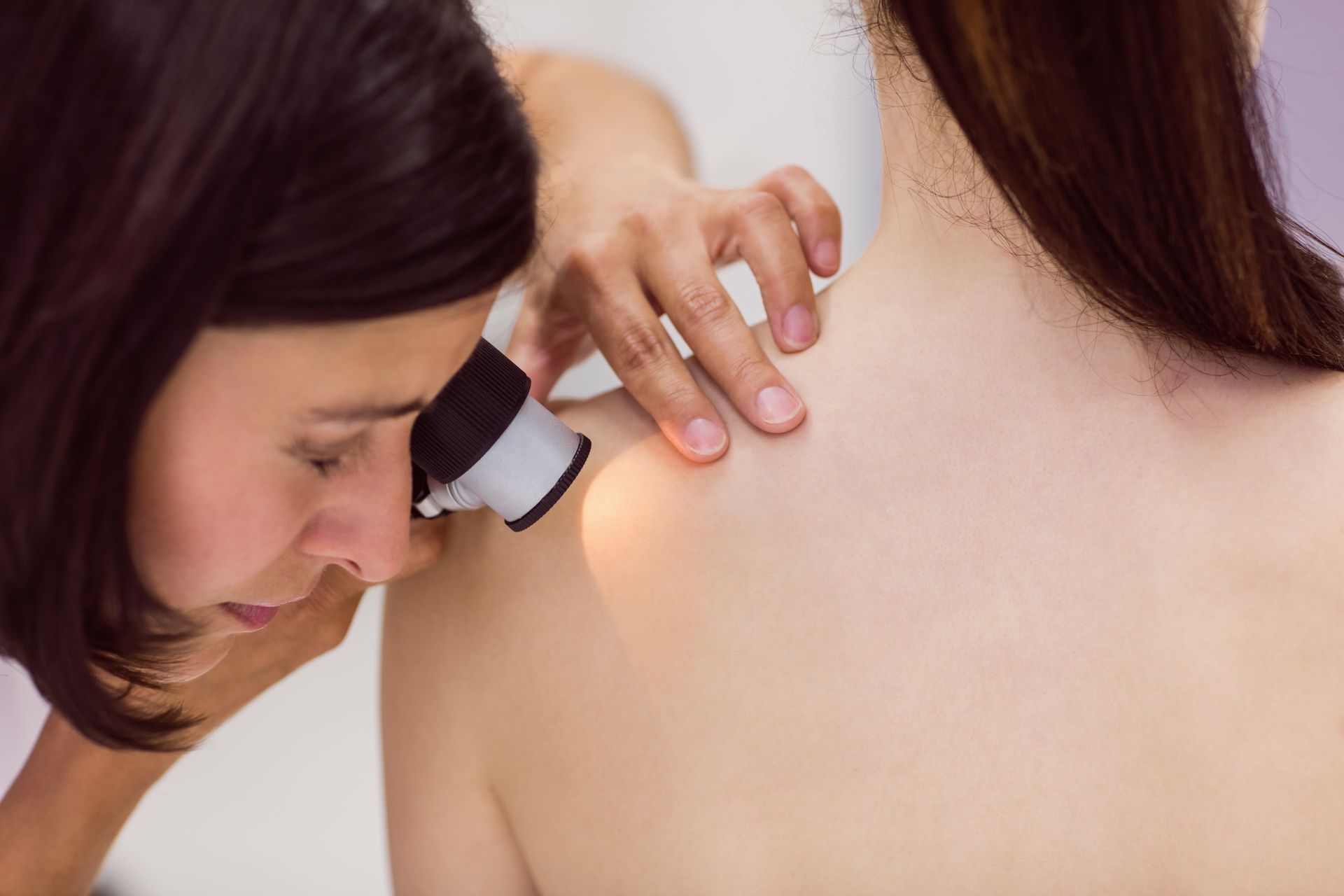
Person examining a mole on another person's bare shoulder with a dermatoscope
By Angie Volzke April 17, 2026
Skin cancer is the most common cancer in the United States and around the world. Understanding your risk and the importance of early detection can make a life-saving difference. About 1 in 5 Americans will develop skin cancer by age 70. Experiencing five or more sunburns can double your risk of melanoma. When caught early, melanoma has a 99% five-year survival rate. Skin cancer is diagnosed at a high rate across the country. In fact, more than 9,500 people in the U.S. are diagnosed every day, and each year, more people are diagnosed with skin cancer than all other cancers combined. Nonmelanoma skin cancers are especially widespread, with over 5.4 million cases treated in more than 3.3 million people, still the most reliable estimate available. Additionally, actinic keratosis, the most common precancerous skin condition, affects more than 58 million Americans. Beyond the impact on health, skin cancer also carries a significant financial burden. The annual cost of treatment in the U.S. is estimated at $8.1 billion, including $4.8 billion for nonmelanoma skin cancers and $3.3 billion for melanoma. Knowing these facts is the first step in protecting your skin and scheduling regular screenings can help catch issues early, when they are most treatable.
By Angie Volzke December 9, 2025
¿Qué es Medicare?
Woman taking man's blood pressure with a digital monitor in a home setting.
By avolzke December 9, 2025
Medicare is health coverage for adults 65+, but you may qualify earlier if you have a disability, ESRD, or ALS. Some people are enrolled automatically, while others need to sign up, it all depends on when you begin receiving Social Security benefits. You can have an annual Wellness visit to update a personalized plan for preventing disease or disability; this visit focuses on prevention, not a physical exam. Medicare Part B covers the cost for your annual visit.
Doctor taking patient's blood pressure with stethoscope and cuff on a white table.
By avolzke November 3, 2025
Your Guide to Medicare Wellness Visits and Preventive Care
Person using a lancet to draw blood from a finger to test blood glucose, with a glucose meter in the background.
By avolzke October 30, 2025
Understanding Diabetes: Symptoms, Testing, and Prevention
Person holding hands with another, offering comfort. Teal nails, neutral clothing.
By avolzke October 3, 2025
Understanding Intimate Partner Violence vs. Domestic Violence
Person receiving a vaccination shot in the arm; doctor holding syringe with blue gloves.
By avolzke September 29, 2025
Understanding the Flu Vaccine
Woman hugs a child, both faces hidden, indoor setting, sunlight.
By avolzke September 9, 2025
Suicide is one of the leading causes of death among both youth and adults in the United States. For every life lost, many more individuals make a plan, attempt suicide, or seek care in an emergency department. Mental health plays a major role. Nearly half of people who die by suicide have a history of a diagnosed mental health condition. However, many others may struggle silently, with no diagnosis at all. Access to timely mental health care can make a critical difference in reducing risk. It’s important to understand that suicide is complex. Factors at the individual, relationship, and community levels can all contribute. Veterans, for example, face higher suicide rates than the general population. Programs like the CDC’s Comprehensive Suicide Prevention program and the Make the Connection campaign are working to provide support, share personal stories, and connect veterans to resources. Youth mental health is also an urgent concern. According to the most recent data from 2023, 1 in 5 U.S. high school students reported seriously considering attempting suicide in the past year. This highlights the importance of open conversations, prevention efforts, and ensuring young people know help is available. If you or someone you know is struggling or in crisis, you are not alone. Free and confidential help is available 24/7/365. Call or text 988 or chat at 988lifeline.org .